PPF vs ceramic coating: what each actually does
One is a physical layer that takes the hit. The other is a thin, slick coating that makes paint easier to keep clean. What each protects against, and when it makes sense to have both.
Paint protection film and ceramic coating are often sold as rival versions of the same thing. They aren’t. They work in completely different ways, protect against different things, and are often used together. Once you know what each one actually does, the choice usually makes itself.
What is a ceramic coating?
A ceramic coating is a liquid, applied by hand to clean, prepared paint. As it cures, it bonds to the clear coat and forms a hard, glassy layer. That layer is very thin, and that’s the point: it’s invisible, it follows every contour of the car, and it adds nothing you can feel.
Preparation matters as much as the product. The paint is washed, decontaminated and usually machine-polished first, because a coating seals in the surface underneath it, swirls and all.
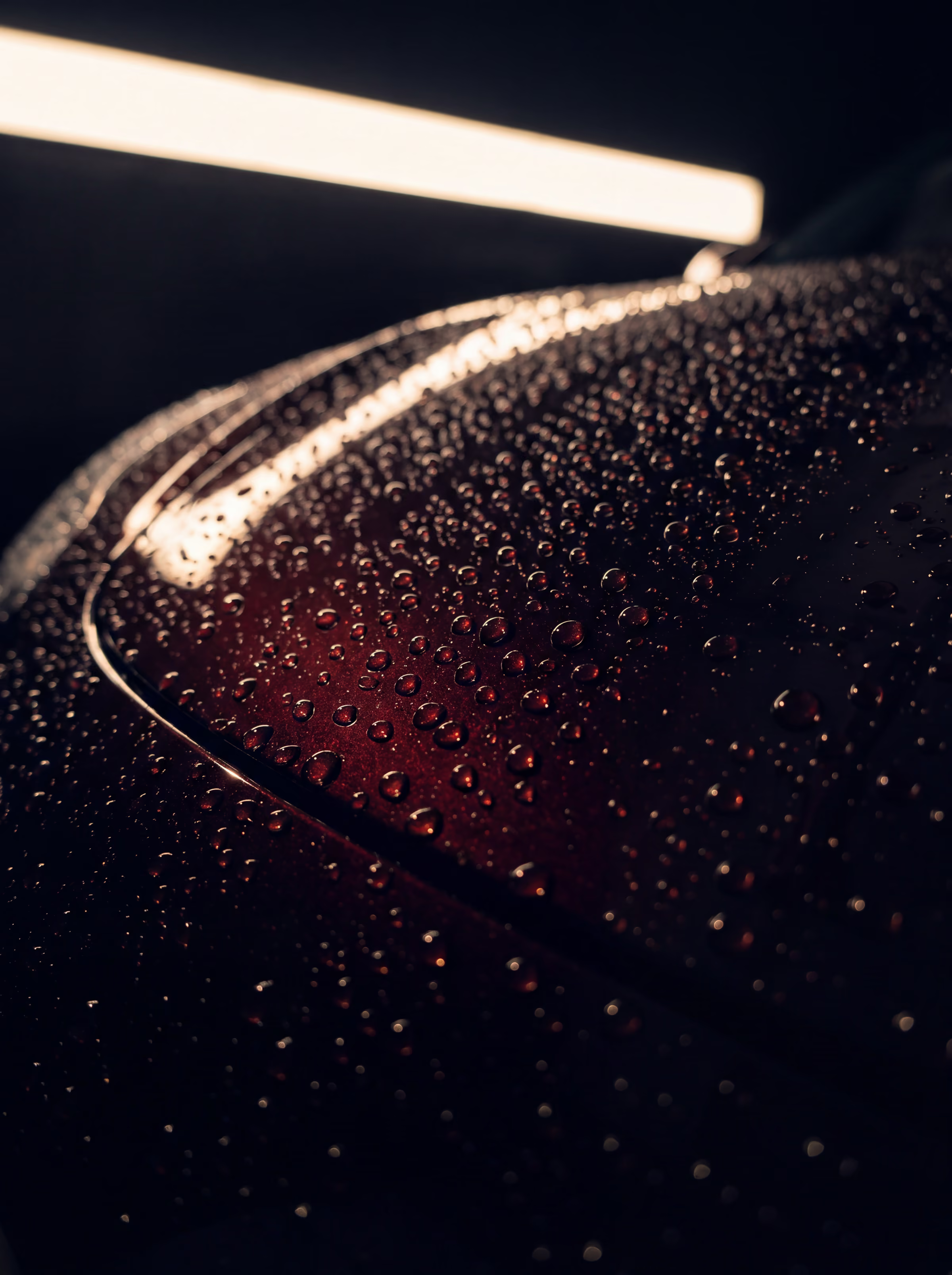
What it gives you is a slick, hydrophobic surface. Water beads and runs off, dirt struggles to stick, and bird droppings and bug residue lift off more easily, so the car is quicker to wash and stays cleaner for longer between washes. Most coatings add gloss too.
What it can’t do is absorb an impact. A stone thrown up at highway speed carries far more energy than a layer that thin can soak up. Marks that go deeper than its surface stay, and over time a coating wears and needs topping up or reapplying, on a schedule set by its maker.
What is paint protection film?
PPF is a sheet of polyurethane film, clear, matte or coloured, fitted panel by panel by a trained installer. It’s a physical layer between the paint and the road. When a stone hits, the film takes it: the urethane flexes and absorbs the strike instead of the paint chipping.
GSUIT films are aliphatic TPU (thermoplastic polyurethane) with a nano-ceramic top coat, and the two layers do different jobs. The TPU is the armour against chips, scratches and daily wear. The top coat self-heals light swirls and scuffs when warmed by the sun, warm water or gentle heat, and gives the film a hydrophobic, stain-resistant surface.
In other words, GSUIT clear and matte films already bring some of what people buy a coating for.
What each one protects against
| Paint protection film | Ceramic coating | |
|---|---|---|
| Stone chips | Yes. A physical layer takes the impact. | No. Too thin to absorb an impact. |
| Light swirls and scuffs | The self-healing top coat recovers light marks with heat. | A hard surface, but marks in it don’t heal. They’re polished out, which wears the coating. |
| Easy washing, water beading | Yes. GSUIT top coats are hydrophobic. | Yes. The main reason to apply one. |
| Stains | Stain-resistant top coat. | Resists staining. |
| Changing the finish | Yes: matte, satin and colour films. | No. Matte coatings keep a matte finish; they don’t create one. |
| Removal | Peels off cleanly at end of life when correctly fitted. | Wears away over time, or is polished off. |
| Warranty | GSUIT: 10 years on the film material. | Set by the coating’s maker. |
Which matters more?
Ask what kind of damage you’re trying to prevent. Chips are the damage a wash can’t fix: a chipped bonnet needs touch-up paint or a respray, while a dull, dirty finish needs a wash. If the car does highway kilometres, country roads, or time behind trucks, film protects against the more expensive problem.
Sun is the other factor. GSUIT clear films use aliphatic TPU and a top coat with UV-blocking, anti-yellowing chemistry, chosen to keep the film clear under strong Australian sun.
If the car lives in a garage, rarely leaves the suburbs, and the main goal is a car that’s easier to keep clean, a coating may be all you need.
Do I need both?
Many owners end up with both, split by area: film on the panels that take the hits, usually the bonnet, front bumper, guards and mirrors, often with sills and door edges added, and a coating on everything else for easy washing.
Over the film itself, a coating is optional. Because GSUIT clear and matte films already carry a hydrophobic, stain-resistant nano-ceramic top coat, many customers won’t need one there. Some still coat the whole car so every panel feels the same when washing, which is fine if it’s done right.
Film takes the hit. A coating makes the car easier to keep clean. They solve different problems.
If I want both, what goes on first?
Film first, then the coating. Film adhesive needs bare, decontaminated paint to bond properly: wax, polish oils and other residues on the surface are among the main causes of lifting edges. A coating’s whole job is to stop things bonding to the paint, so if the car is already coated, talk to your installer about preparing the panels that will be filmed.
When a coating goes over film:
- Wait until the film has fully cured. Your installer will tell you when.
- Use a coating that its maker approves for paint protection film.
- On matte and satin film, use a matte-specific product. A gloss coating will change the finish. Our guide to gloss and matte film covers the care differences.
Installers can find the same advice in our installer FAQ.
Questions to ask before you pay for either
- What exactly is being protected? Ask for the panels, one by one.
- For film: which film, and what does its warranty cover? With GSUIT, the material is covered for 10 years from installation. Labour is a separate question for your installer. Our guide to PPF warranties explains the difference.
- For a coating: how long does its maker say it lasts, and what maintenance does that depend on?
- If you’re doing both: who does which, and in what order?